Choosing between Yodlee and Wealthica comes down to a clear tradeoff between global breadth and Canadian depth. Yodlee delivers enterprise scale across multiple countries and data categories, while Wealthica focuses on high fidelity investment data tailored specifically for the Canadian ecosystem.
This article breaks down support models, market focus, implementation, data quality, and pricing to…
Investing
All about stocks, robo-advisors, ETFs and investing.
In theory, a Family Office could centralize its wealth at one institution. In practice, no sophisticated UHNW structure ever does.
WHY? Because wealth is not a single event. Assets are acquired across multiple eras, jurisdictions, advisors, mandates, deal structures, and family branches. Each new layer of wealth formation tends to create a new “endpoint”…
Asset protection is a deliberate process that shapes how wealth withstands pressure from lawsuits, creditors, and unexpected claims. The subject carries weight because financial success often attracts attention and risk at the same time. A thoughtful structure allows assets to remain productive while staying insulated from threats. The goal centers on preserving control, dignity, and…
Money enters a relationship quietly and then begins to speak loudly. Shared bills, daily choices long-term dreams, and unresolved fears all surface through financial behavior. Financial therapy for couples brings these hidden conversations into the open and turns conflict into cooperation. The process blends emotional awareness with practical financial guidance so that partners can move…
Luxury watches have evolved beyond being mere fashion accessories. In Canada, they have found their place as tangible investment assets with potential for long-term appreciation. Brands such as Rolex, Patek Philippe, and Audemars Piguet have seen their values rise considerably over the years, attracting collectors and investors alike. As the secondary market for investment-grade watches…
Financial success often lies not in how much money one earns but in how much of that money is retained and grown over time. The Lifetime Wealth Ratio (LWR) is one of the most revealing measures of this financial efficiency. It connects lifetime earnings and current wealth, offering a clear picture of how income has…
The fascination with fine timepieces has transformed from mere admiration into a calculated investment pursuit. Luxury watches represent a unique blend of artistry, mechanical precision, and financial growth. For many investors, these intricate instruments have evolved into tangible stores of value that can appreciate over time. In the same way collectors of rare wines or…
Artificial Intelligence is changing how people interact with money. Algorithms now analyze portfolios, predict market shifts, and offer advice that once came from professional financial planners. The rise of AI-driven financial tools has sparked conversations about the future of personal finance. As technology becomes more precise, investors are beginning to ask an important question: Can…
Sudden financial gains often arrive unexpectedly. They might come from an inheritance, a business sale, a lottery prize, or even a legal settlement. Whatever the source, a large sum of money can shift your financial life overnight. For many people, it brings a mixture of excitement and anxiety. The opportunities are immense, but so are…
Lumpy assets play a critical role in wealth management. These are assets that cannot be divided into smaller parts without losing their value or utility. Unlike liquid assets such as cash or stocks, lumpy assets require large transactions when you buy or sell them. Real estate, private businesses, and unique collectibles are some of the…
Investing is a long journey that demands informed decisions. Among the most important choices is how to enter the market. Should you invest all your capital at once, or space it out over time? This fundamental question divides investors into two camps: those who favor Dollar Cost Averaging (DCA) and those who choose Lump Sum…
The idea of creating a holding company often arises at certain stages of financial growth. Entrepreneurs, investors, and professionals sometimes come to a point where personal ownership of assets feels limiting. A holding company, by design, provides a structure that centralizes ownership while creating protection and flexibility. It does not operate like a store or…
Art investing has become an established way to build wealth while diversifying beyond traditional assets. Unlike equities or property, art combines financial potential with cultural value. Investors are no longer confined to conventional tools for growth, and fine art has proven to be a serious contender in the global investment landscape. Wealth managers, collectors, and…
Rollover equity has become a core strategy in modern private equity transactions. It allows sellers to retain a stake in their business after a partial or full sale, creating an opportunity to continue benefiting from the growth of the company under new ownership. This arrangement is typical in management buyouts, private equity acquisitions, and recapitalizations,…
Some questions do not have a perfect answer, only an honest one that reflects reality as it unfolds. You won't find a single number carved in stone when it comes to how much of your net worth should be tied up in real estate. But you can discover a range, shaped by personal goals, life…
The road to homeownership can take a very different path depending on your financial situation. Some people have a steady job, predictable income, and clear pay stubs. Others might have considerable wealth tied up in stocks, real estate, or other non-traditional assets, but very little income showing on paper. Lenders once saw these people as…
Recession-resistant stocks and ETFs are securities that historically maintain stable revenue and dividends during economic contractions. The defensive characteristic comes from selling essential goods or services that consumers continue to buy regardless of economic conditions. The traditional defensive sectors are consumer staples (groceries, household products), utilities (electricity, natural gas, water), telecommunications (mobile, internet), and healthcare.…
A leveraged ETF bond uses derivatives and borrowed capital to deliver 2x or 3x the daily return of a bond index. Long leveraged ETFs profit when bond prices rise; inverse versions profit when prices fall. The products reset daily, producing volatility decay over multi-day holding periods. Canadian investors typically access these products through US-listed funds…
A financial inventory is a comprehensive snapshot of household assets, liabilities, income, and expenses at a specific point in time. A complete inventory captures bank accounts, investment accounts (TFSA, RRSP, FHSA, RESP, non-registered), real estate, vehicles, valuables, mortgages, credit cards, lines of credit, student loans, and recurring income and expenses. The inventory produces a single…
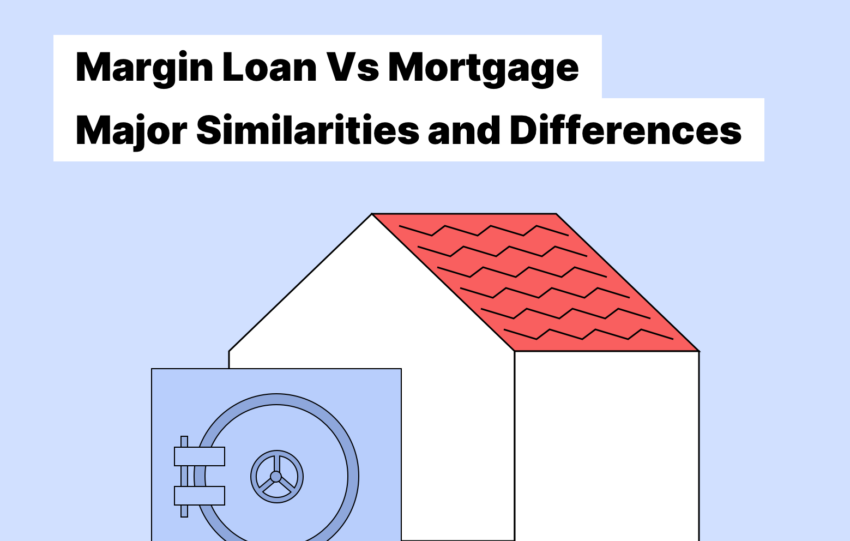
A margin loan is a short-term loan from a brokerage secured by stocks and bonds, used to amplify investment returns. A mortgage is a long-term loan from a bank or lender secured by real estate, used to purchase a home. Margin loans typically charge prime + 1% to prime + 3% (so 6% to 9%…
As a smart investor, your goal is to make intelligent decisions that will grow your wealth over time. You may have heard terms like “buy and hold” or “long-term investing,” but another approach that may grab your attention is tactical investing. Unlike a traditional buy-and-hold strategy, tactical investing is a more hands-on approach, allowing you…
Understanding capital gains tax is essential for Canadian investors looking to maximize their returns while staying on the right side of the law. Whether you're selling stocks, real estate, or digital assets like cryptocurrency ETFs, capital gains tax significantly determines how much of your profit you'll keep. In Canada, the government taxes only a portion…
Managing personal finances can be overwhelming, especially when navigating Canada's unique financial landscape. Canadians face various financial challenges, from understanding the nuances of tax-advantaged accounts like RRSPs and TFSAs to keeping track of investments and debt. Wealthica becomes a powerful ally, helping you avoid common mistakes that could otherwise jeopardize your financial future. By providing…
Canada was the first country to approve a spot Bitcoin ETF. The Purpose Bitcoin ETF launched on the Toronto Stock Exchange in February 2021. The Canadian crypto ETF market has since expanded to cover Bitcoin, Ether, and XRP, with assets under management approaching CAD $6 billion by the end of 2025. The US approved spot…
The Canadian investing landscape in 2026 includes more registered account types than ever. RRSP, TFSA, FHSA, and RESP are all available. Low-cost ETFs like XEQT, VEQT, and XIC keep MERs below 0.25%. Do-it-yourself platforms include Wealthsimple Trade, Questrade, and TD Direct Investing. The strategy you pick determines which tools you use and in what proportion.…